

The reviewer has 30 minutes before the next handoff. A preparer has dropped a 1040 binder on the desk with a W-2 showing overtime, a brokerage 1099-B summary, and the usual collection of receipts. Nothing looks unusual at first glance. The forms resemble last year's forms, the extracted amounts appear to tie, and the temptation is to work down the return line by line.
That approach is less reliable for the current tax-law environment. The central risk is no longer only whether the source document was entered correctly. It's whether a familiar source document now produces a different tax outcome under a changed set of eligibility tests, deductions, and phaseouts. The benefits of AI in audit workflows are most relevant when review teams use technology to isolate those changed outcomes rather than accelerate old review habits.
Table of Contents
- The Monday Morning 1040 Reviewer Problem
- What OBBBA Actually Changed for 1040 Returns
- Where Complexity Really Lives, Phaseouts and Stacking Cliffs
- Same Form, Different Tax Outcome, Reviewing When the W-2 Did Not Change
- Building Exception-Based Review Rules Inside WP TieOut
- Cross-Border Signals a 1040 Firm Cannot Ignore in 2026
- Deadlines, Client Conversations, and the 2026 Review Checklist
The Monday Morning 1040 Reviewer Problem
The binder lands just before the morning meeting. The W-2 contains wages, the employee's withholding looks ordinary, and the preparer has included a brokerage statement with realized gains and losses. The client also mentioned overtime in the organizer, but the W-2 itself doesn't announce that a new deduction may apply.
The reviewer's first instinct is familiar: confirm the names and Social Security numbers, compare wages and withholding, check the brokerage totals, scan Schedule A, and move to the next return. That sequence catches transcription errors. It doesn't reliably catch a same form, different tax outcome error.
Why visual review misses the important exception
The IRS said that Form W-2, existing Forms 1099, Form 941, and withholding tables wouldn't change for tax year 2025 during the phased implementation of the One Big Beautiful Bill Act, as explained in its announcement on unchanged individual information returns. Yet the legislation changed the treatment of certain income and deductions. A reviewer can therefore tie every source document correctly and still miss a deduction that belongs on the return.
That distinction changes the review question. Instead of asking only, “Does the W-2 agree with Form 1040?” the reviewer must also ask, “Does this W-2 contain facts that trigger a new computation elsewhere?” Overtime and tips are the obvious examples. The W-2 remains an information source, but it no longer tells the whole tax story by itself.
Practical rule: A source document can be correct, complete, and unchanged while the return built from it is still wrong.
The five workflow shifts
The firms handling this well are changing the review binder in five ways:
- Permanent provisions: They treat the permanent individual provisions and new deductions as baseline return logic, not temporary footnotes.
- Phaseout screening: They identify filing-status and income thresholds before reviewing the claimed benefit.
- Static-form exceptions: They flag W-2 and 1099 data that may require a different Schedule 1, Schedule A, or related computation.
- Exception-based review: They focus reviewer time on mismatches between source facts and expected tax treatment.
- Cross-border intake: They ask domestic-return clients about foreign income, accounts, platforms, and remote work arrangements that can create international reporting signals.
The practical message is simple. The 2026 tax law updates aren't just a research assignment for the preparer. They're a redesign problem for organizers, templates, review checklists, and sign-off procedures.
What OBBBA Actually Changed for 1040 Returns
A client's W-2 can tie perfectly to payroll records and still leave the 1040 review incomplete. The One Big Beautiful Bill Act created that problem by making many TCJA-era individual provisions permanent while adding deductions for qualified tips, overtime compensation, and vehicle loan interest. It also raised the SALT cap to $40,000, with a MAGI phaseout beginning at $500,000, as summarized in the IRS tax inflation adjustment release.
These provisions are not isolated checkboxes. Each creates a fact pattern, an eligibility test, a calculation, and a downstream review point. Return templates may look familiar even though the tax logic behind them has changed.
Start with return behavior, not the headline
Tips and overtime may still appear through familiar payroll reporting. The preparer must separately identify whether the income qualifies, determine the deductible amount under the applicable rules, and place the result in the correct computation. The review binder should retain the source evidence, the amount used, and the preparer's eligibility conclusion.
A clean W-2 tie-out therefore proves only that the reported amount was transcribed correctly. It does not prove that the return applied the right treatment to that amount.
Vehicle loan interest requires the same separation. A loan statement establishes that interest was paid, not that every dollar qualifies. The reviewer should see the vehicle and loan facts, confirm the qualified-interest calculation, and test the applicable limitation rather than accept the lender's annual total without further analysis.
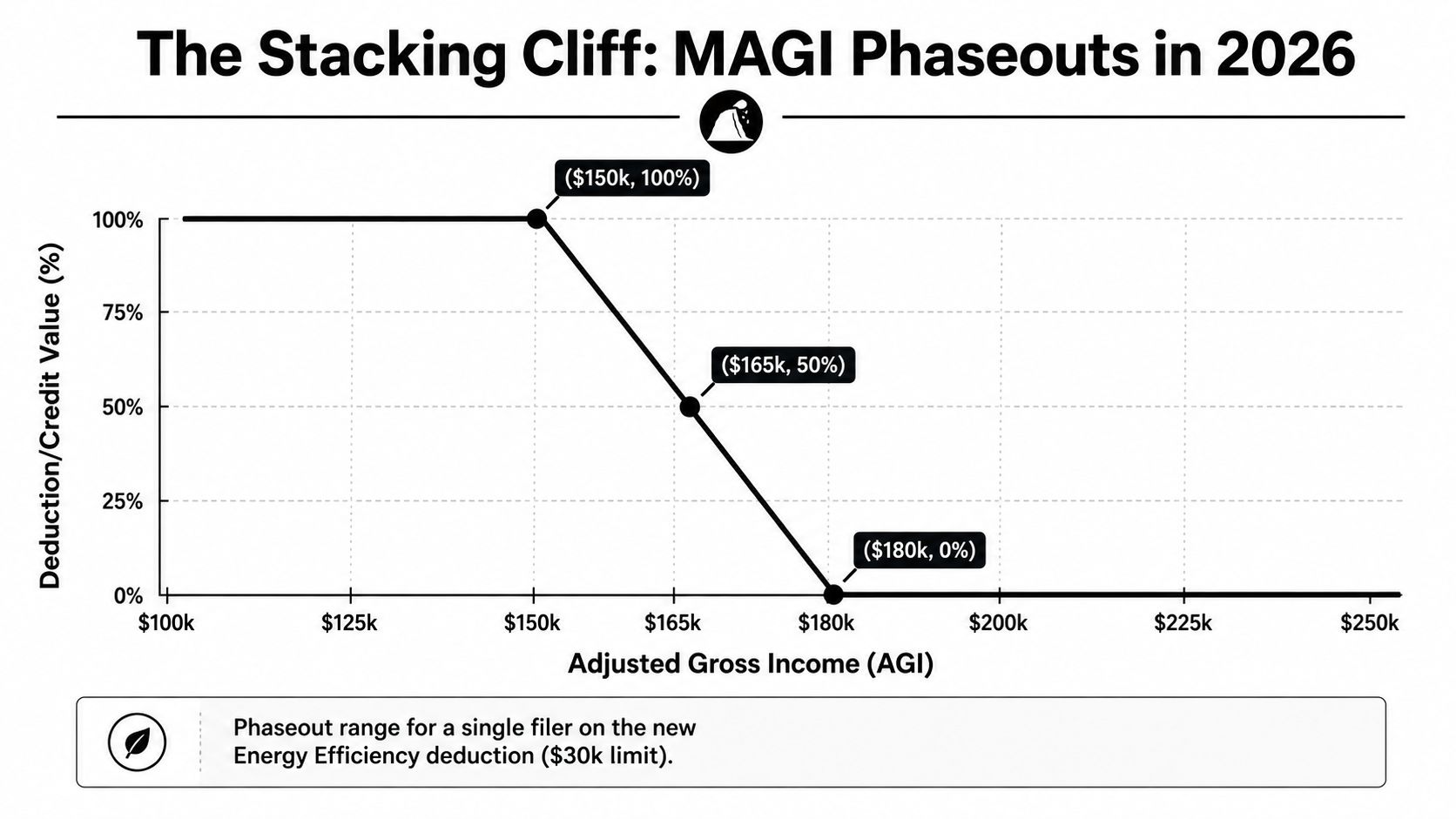
The SALT change requires its own control. Schedule A may show taxes above the prior cap, but the full new cap is not automatically available. The reviewer must test MAGI and filing status before accepting the deduction.
Update templates and workpapers
The software may calculate these provisions correctly. Reviewers still need visible evidence that the preparer considered them. Add dedicated organizer and workpaper fields for:
- Tips: Employer, occupation, amount identified, eligibility conclusion, and deduction computation.
- Overtime: Employer, compensation source, amount identified, and reconciliation to payroll records.
- Vehicle interest: Vehicle-use facts, loan documentation, qualified-interest calculation, and limitation analysis.
- SALT: Schedule A amount, filing status, MAGI, phaseout calculation, and final allowable deduction.
Client profiles should generate targeted prompts for tip earners, employees with substantial overtime, vehicle purchasers, high-SALT homeowners, and clients with complex investment income. A generic “deductions reviewed” tick mark does not show that anyone tested these fact patterns.
Separate source validation from tax treatment validation. The first confirms that the document was read correctly. The second confirms that the documented facts received the correct tax treatment. That distinction should be visible in the review binder, because a clean tie-out can otherwise be mistaken for a complete review.
Where Complexity Really Lives, Phaseouts and Stacking Cliffs
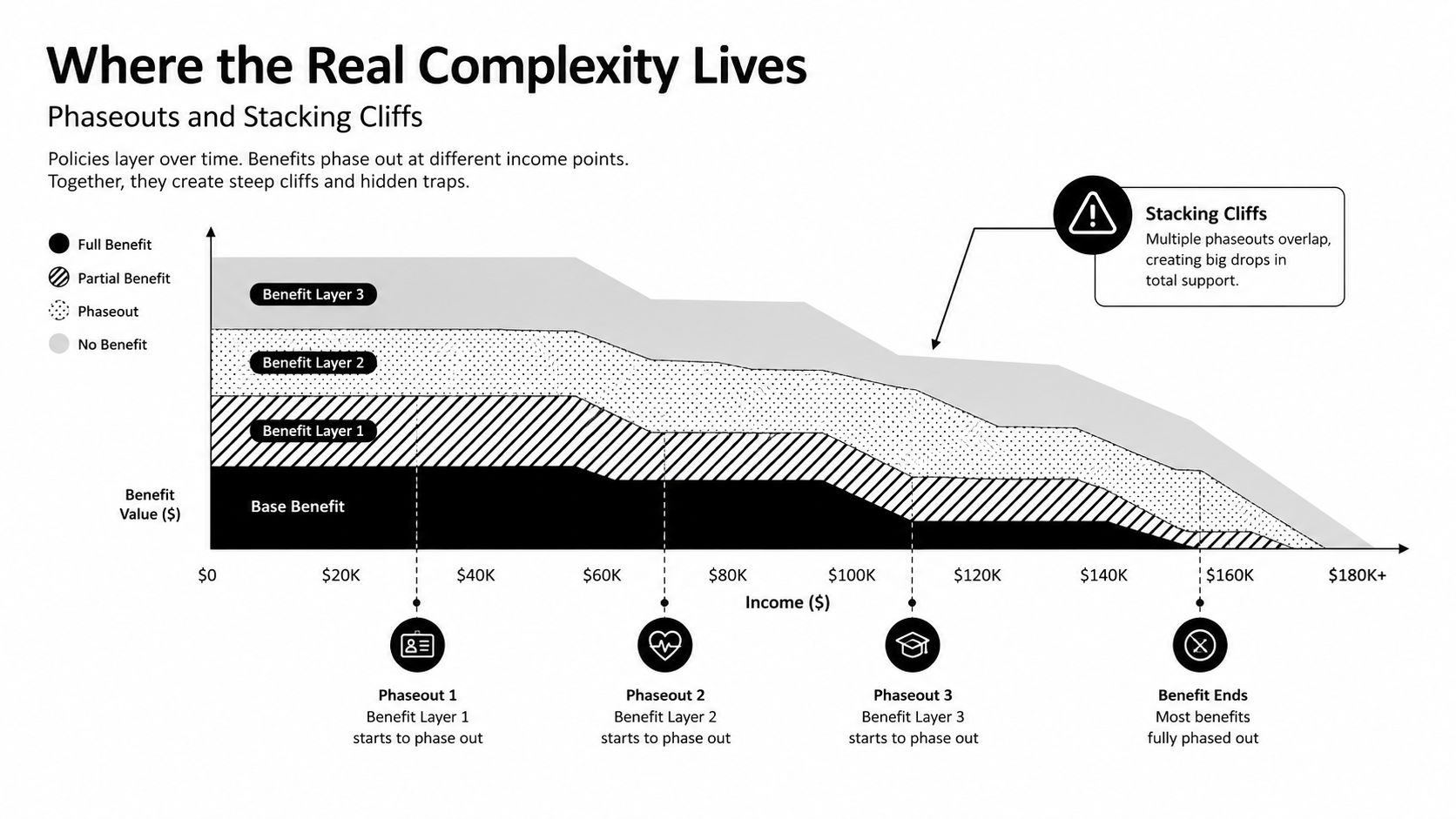
A deduction can appear on the worksheet and still produce little value on the return. Income thresholds, filing status, and overlapping phaseouts determine whether a provision delivers its stated benefit, a reduced benefit, or none at all.
For tax year 2025, the standard deduction is $15,000 for single filers and $30,000 for married couples filing jointly, as noted earlier. Those amounts provide the comparison point for clients deciding whether itemizing makes sense. They do not, by themselves, resolve the interaction with SALT, senior deductions, investment income, or other provisions.
The thresholds change the client conversation
The SALT cap's $500,000 MAGI phaseout threshold matters for clients who assume that a higher statutory cap automatically creates a higher deduction. A homeowner may have enough state and local taxes to use the full cap in a simple calculation, yet the allowable amount can change once MAGI enters the phaseout range.
The extra senior deduction creates another review trigger. The relevant phaseouts begin at $75,000 for single filers and $150,000 for joint filers, according to the verified tax-law summary. A retirement-age client may therefore qualify for a new benefit on paper while wages, distributions, dividends, or other income reduce or eliminate it.
The reviewer should model the interaction before approving the deduction. A tax pro forma can compare the return under standard and itemized deductions while showing whether one additional income item changes several provisions at once.
A practical illustration
Consider a retired married couple with $120,000 of Social Security, $40,000 of qualified dividends, and $18,000 of SALT. The example is not intended to calculate a final liability from incomplete facts. It identifies the review questions created by the combination.
The reviewer must determine how much of the Social Security is taxable, how the qualified dividends affect MAGI and taxable income, whether the couple qualifies for the extra senior deduction, and whether itemizing produces a better result than the joint standard deduction. The $18,000 of SALT does not answer the itemization question by itself. The decision depends on the full Schedule A and its interaction with income-based provisions.
A preparer who checks each item separately can miss the combined effect. A reviewer who treats the return as a set of linked thresholds is more likely to catch an incorrect assumption, especially when a brokerage statement or retirement distribution moves the client into a different calculation range.
The review binder should show the assumptions, threshold calculations, and effect on the final deduction. That documentation gives the reviewer a clear path from source documents to tax treatment.
The useful question isn't “Did the client receive the deduction?” It's “Which income items changed the client's eligibility for every deduction on the page?”
That is the underappreciated issue in these tax law updates. The tax cut may exist at the statute level, while the client's result depends on where income falls relative to each cliff and how those cliffs stack.
Same Form, Different Tax Outcome, Reviewing When the W-2 Did Not Change
The unchanged information-return rules create a deceptively difficult review environment. A W-2 can report wages in the same familiar boxes, and existing 1099 forms can arrive in the same format, while the return's computation changes because the law now permits deductions tied to the underlying income.
The reviewer shouldn't ask the W-2 to perform a job it was never designed to perform. Box 1 reports wages. It doesn't necessarily identify which portion represents qualified overtime or provide every fact needed to claim a deduction for tips. The preparer must connect the source amount to supplemental documentation and a defensible eligibility analysis.
Three checks belong in the binder
Tip deduction eligibility. If the organizer, payroll detail, or client interview indicates tip income, the workpaper should identify the employer and occupation, document the amount considered, and show how the deduction was calculated. A W-2 tie-out alone isn't sufficient because the form can remain unchanged even when the tax treatment changes.
Overtime deduction eligibility. The reviewer should compare the client's overtime detail with payroll records and the return computation. If the preparer claims a deduction without a source-linked reconciliation, the reviewer should return the item for support. If the client reports substantial overtime but no deduction appears, the exception should work in the opposite direction.
SALT cap phaseout. When Schedule A includes state and local taxes near or above the new cap, the reviewer should confirm MAGI, filing status, and the phaseout calculation. The income documentation workflow should capture the source documents that support both the amount and the phaseout inputs.
Why last year's template fails
The most persistent error is a procedural shortcut: the preparer sees the same form and repeats last year's treatment. The reviewer then confirms that the form was entered correctly and moves on. That process works for pure transcription control. It fails when legislation changes the relationship between reported income and allowable deductions.
A 1099-B summary illustrates the broader point. The extraction process may be identical, but gains and losses can affect MAGI, itemization decisions, senior-deduction eligibility, and other calculations. The reviewer doesn't need a new extraction method for every form. The reviewer needs a new impact map showing which return computations each source category can influence.
The binder should therefore include an exception reason, the supporting source, the preparer's conclusion, and the reviewer's resolution. “Reviewed” is too vague. “Overtime identified from payroll detail, reconciled to W-2 wages, deduction computation supported, reviewer approved” creates a usable audit trail.
Building Exception-Based Review Rules Inside WP TieOut
Exception-based review starts with a reliable comparison. The platform ingests the W-2s, 1099s, brokerage statements, and related source documents, validates the extracted fields, and compares the validated workpaper with the drafted return. The reviewer then sees the items that need judgment instead of spending equal time on every line.
That architecture fits the current problem because the risk doesn't come only from an amount failing to tie. It comes from a source amount tying perfectly while the expected downstream treatment is absent or inconsistent.
Configure rules around facts and outcomes
A firm can translate the new provisions into targeted review rules:
- W-2 income signals: If the organizer or payroll support indicates tips or overtime, require a corresponding eligibility field and Schedule 1 review. If the source suggests either category but no related computation appears, create an exception.
- SALT threshold review: If Schedule A state and local taxes exceed $40,000, require a phaseout analysis before approval. The rule should distinguish a high source amount from an automatically allowable deduction.
- Senior deduction review: If the return claims the additional senior deduction, require filing-status and MAGI validation against the $75,000 single or $150,000 joint phaseout thresholds.
- Vehicle-interest support: If a vehicle loan-interest deduction appears, require the loan statement and vehicle-use facts, then compare the claimed amount with the qualified calculation.
- Brokerage impact: If a 1099-B produces gains or losses that materially affect MAGI or itemization, route the return for a computation-impact check rather than treating the brokerage tie-out as complete review.
The rule should be designed around the exception, not the document label. “W-2 reviewed” is a weak control. “Overtime indicator present, deduction supported or exception resolved” is a stronger one.
Preserve evidence as the review happens
The source-linked PDF binder should retain the original W-2 and related pages, with bookmarks, stamps, and annotations tied to the workpaper conclusion. That matters when a reviewer needs to understand why a deduction was accepted, reduced, or rejected without reopening the entire client file.
Role separation also improves handoffs. The preparer documents the facts and computation, the reviewer resolves exceptions, and the partner confirms that high-risk items have an appropriate sign-off. Each item should carry who checked it and when, so the final binder shows the sequence of work rather than only the final status.
Review design principle: Every new deduction needs both a positive rule and a negative rule. Flag the return when the deduction appears without support, and flag it when the source facts suggest the deduction but the return omits it.
What this replaces
Line-by-line eyeballing still has a place for unusual returns and professional judgment. It shouldn't be the firm's only control. It treats low-risk transcription checks and high-risk eligibility decisions as if they deserve the same attention, which dilutes reviewer time.
A rules-based exception layer gives the reviewer a short queue of decisions. The system validates that the W-2 amount was extracted correctly, then asks whether the return's treatment makes sense given the source facts. That is the operational difference between automation that merely moves documents and automation that improves review judgment.
Cross-Border Signals a 1040 Firm Cannot Ignore in 2026
A domestic 1040 practice doesn't need every preparer to become a Pillar Two specialist. It does need an intake process that recognizes when an individual return touches a multinational group, foreign income, overseas accounts, or a digital platform operating across borders.
Pillar Two affects roughly 140 countries and establishes a 15% global minimum tax for large multinational enterprises, according to the OECD Pillar Two implementation material. The first GIR filings for calendar-year taxpayers are due June 30, 2026, while the IIR and QDMTT began taking effect in many countries on January 1, 2024, and the UTPR is generally delayed until 2026 or later. Those dates belong on the firm's watchlist even when the 1040 itself isn't the filing vehicle.
What changed operationally
The OECD's January 2026 side-by-side package added four new safe harbors and extended an existing transitional safe harbor by one year, with the new safeguards available for fiscal years beginning on or after January 1, 2026, as described in the OECD global minimum tax update. The OECD then released its Global Minimum Tax Implementation Toolkit on April 30, 2026, signaling a shift from policy design toward operational guidance, as summarized in KPMG's international tax review.
The firm should also track the OECD updates issued on May 18, 2026, concerning late-filing penalties, 52 to 53-week fiscal years, and the Central Record. On May 29, 2026, the GIR MCAA signatories list expanded to include Barbados, Cyprus, Czechia, Hong Kong, and Romania, according to the OECD implementation update cited above.

Add signals to the 1040 interview
Digital-economy rules create a related concern. Azerbaijan's mandatory VAT registration and collection obligations for nonresident digital-service providers take effect August 23, 2026, while the Philippines issued digital-services VAT guidance under Revenue Regulations No. 3-2025 in June 2026. European proposals would transmit invoice data to tax authorities in near real time alongside structured e-invoicing, as described in KPMG's digitalized-economy taxation summary.
For 1040 intake, ask whether the client has foreign-earned income, foreign bank and financial accounts, equity or compensation from a multinational employer, or self-employment income from a nonresident digital platform. Those answers can affect foreign earned income analysis, FinCEN 114 screening, Schedule C documentation, and the need for specialist escalation.
Deadlines, Client Conversations, and the 2026 Review Checklist
A strong review process needs three artifacts: a deadline calendar, a client script, and a binder checklist. Keep them together in the firm's operating procedures so preparers don't have to reconstruct the rules from scattered tax law updates during peak season.
Build one calendar
Include the June 30, 2026 GIR deadline for calendar-year taxpayers, then add the firm's estimated-tax, extension, organizer, and partner-review milestones. The calendar should identify the responsible role, required source documents, and escalation point for each item. International deadlines belong in the same view as domestic workflow dates when clients can have both obligations.
Use a direct client script
A preparer can say:
“Some of the forms you receive haven't changed, but the tax treatment of certain income may have. We need to know whether your wages included qualified overtime or tips, whether you paid significant state and local taxes, whether you had vehicle loan interest, and whether foreign accounts or digital-platform income are part of the picture. These details may affect deductions or reporting even when the W-2 or 1099 looks familiar.”
That wording avoids promising a tax benefit. It tells the client why the firm is asking a question that may not appear on the form.
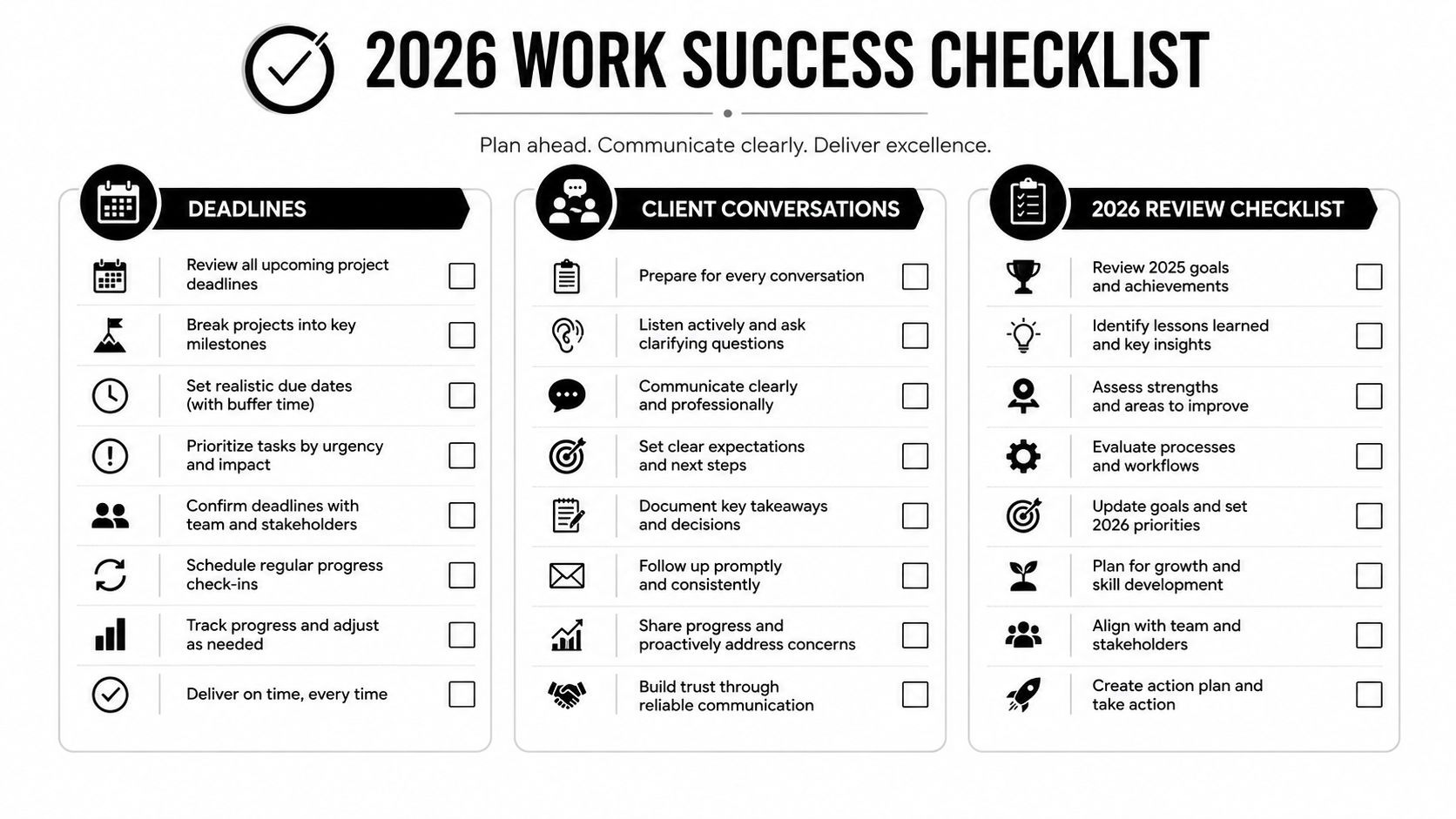
Pin this checklist beside the reviewer station
- Update intake: Add prompts for tips, overtime, vehicle interest, SALT, senior status, foreign accounts, and digital-platform income.
- Revise templates: Add dedicated workpaper fields for eligibility, phaseout inputs, supporting documents, and reviewer conclusions.
- Configure exceptions: Flag missing deductions, unsupported deductions, SALT amounts requiring phaseout analysis, and senior claims that conflict with MAGI.
- Train reviewers: Use sample returns to practice the difference between source-document accuracy and tax-treatment accuracy.
- Verify the binder: Confirm original source pages, bookmarks, annotations, exception resolutions, and check-by and check-when stamps.
- Confirm sign-off: Ensure preparer, reviewer, and partner roles are visible and that unresolved exceptions cannot move to final approval.
- Review cross-border intake: Escalate foreign income, foreign accounts, multinational compensation, and nonresident platform activity when appropriate.
The firm doesn't need a longer checklist for its own sake. It needs a checklist that forces the reviewer to test the places where unchanged forms now support changed outcomes.
WP TieOut helps CPA firms reconcile W-2s, 1099s, brokerage statements, and other source documents against drafted 1040 returns, then route only true discrepancies for review. Visit WP TieOut to see how exception-based checks, source-linked PDF binders, and role-based sign-offs can support your 2026 tax law update workflow.